An Arizona mine and a Nevada facility.
An upstream, past-producing antimony project paired with a downstream, permitted processing facility — the two ends of a domestic mine-to-metal chain.
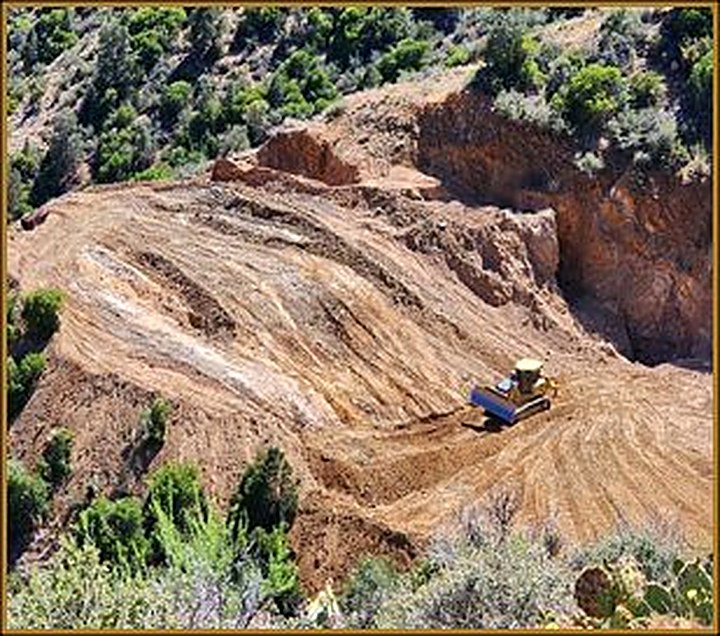
White Spar Project, Arizona
A past-producing antimony prospect comprising four steeply dipping stibnite-bearing quartz veins within the Yavapai Supergroup. Historic workings, high-grade hand-cobbed ore and limited modern exploration support a clear, low-cost pathway to advancement.
| Location | Yavapai County, AZ |
|---|---|
| Status | Past-producing |
| Geology | Yavapai Supergroup |
| Access | Via AZ-89 |
| Extent | ~1,200 ft strike · ≥1,000 ft down dip |
| Historic grade | 30–45% Sb (hand-cobbed ore) |
| Scenario | Tonnage (short tons) | Grade (Sb %) | Contained Sb (tons) |
|---|---|---|---|
| Lower estimate | 1,684,800 | 3% | 50,544 |
| Upper estimate | 1,684,800 | 4% | 67,392 |
Conceptual in nature. Insufficient exploration to define a mineral resource; further exploration may not result in a resource estimate. Historic production and grade figures are drawn from historical records and are unverified to current standards. Geophysical (EM) data is used as exploration support only.
Geology & mineralisation
- Proterozoic metavolcanic and metasedimentary host rocks (Yavapai Supergroup); mineralisation controlled by high-angle NE-trending shear zones
- High-grade stibnite (Sb₂S₃) in massive to banded quartz veins — an orogenic Sb-Au system driven by CO₂-rich metamorphic fluids
- Geophysics: high-conductivity anomalies interpreted as antimony-bearing sulfide zones beneath and along strike from historic workings, extending from near surface to ~250–280 m depth
- Conductive corridors indicate possible feeder structures and alteration pathways — a strong technical basis for drill targeting. Deposit analogues: Wildcat (AZ), Gold Hill (AZ), Yellow Pine (ID), Xikuangshan (China)
Near-term advancement plan
- Phase 1 — Surface evaluation. Data room assembly, geological mapping and surface sampling to refine drill targets; UAV photogrammetry and 3D model of historic workings
- Phase 2 — Drill validation. Diamond core holes (HQ, up to 100 m) targeting vein continuity, grade and down-dip extensions; full assay suite (ICP-MS, fire assay) with QA/QC programme
- Four narrow, steeply dipping veins — geometry well suited to selective underground mining
- A low-cost pathway toward technical de-risking and potential resource definition
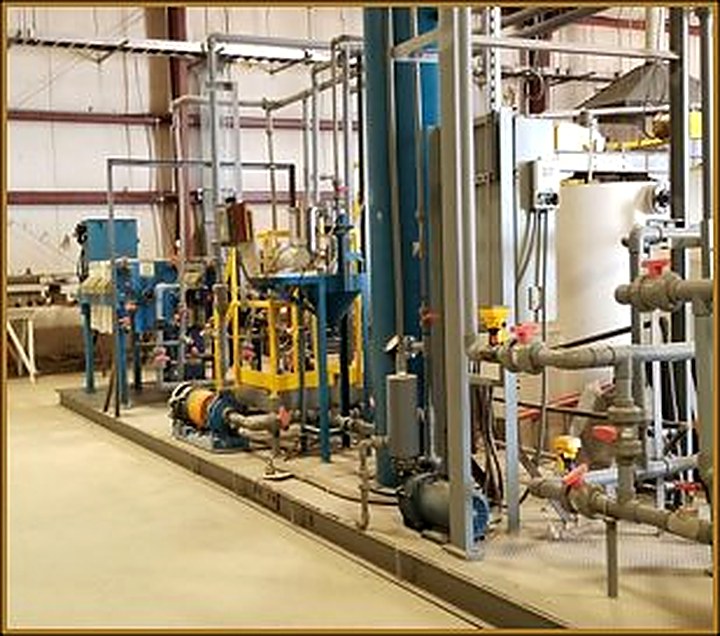
del Sol Facility, Nevada
A turnkey, NDEP-permitted ore processing facility in Amargosa Valley. The 35.37-acre site holds Permit NEV2010101 (Rev. 04, 2024), current through May 2029, with a 12,000 sq. ft. processing building, labs, three-phase power, dedicated water and on-site accommodation for 11 personnel. Multi-discipline analytical and processing capability — fire assay, ICP, XRF, cyanide toll processing and flotation bench testing — with clear title, no liens or encumbrances, and no issues noted at the latest NDEP inspection.
| Location | Amargosa Valley, Nye County, NV |
|---|---|
| Status | Operating |
| Capacity | Up to 18,500 tpa |
| Permit | NEV2010101 (Rev. 04, 2024) |
| Land | 35.37 acres · four parcels |
| Water | Dedicated well · 4.02 ac-ft/yr |
| Power | 3-phase (VEA) |
| Connectivity | 500 Mbps fibre |
Expansion potential
- ~35-acre footprint. Fully permitted brownfield site with substantial undeveloped land — headroom to expand antimony throughput and add processing trains without greenfield permitting
- Low-cost, green power. Nevada’s fast-growing solar and renewable capacity provides a cheap, low-carbon energy base for energy-intensive electrometallurgical processing
- Tungsten & APT. Investigate a tungsten flowsheet to produce ammonium paratungstate (APT), the key traded tungsten intermediate and a USGS critical mineral
Adjacent opportunities
- Sulphuric acid. Sulphur reporting from stibnite processing could be recovered as a sulphuric acid precursor — a reagent facing well-flagged structural global supply shortages
- Rare earths & adjacent feed. Bolt on rare earths and other critical minerals, sourcing polymetallic feed from deposits within trucking distance where geology, logistics and economics align
- Infrastructure leverage. Existing autoclave, caustic leach, filter presses and lab suite offer a natural front-end for APT and multi-mineral circuits, limiting incremental capex